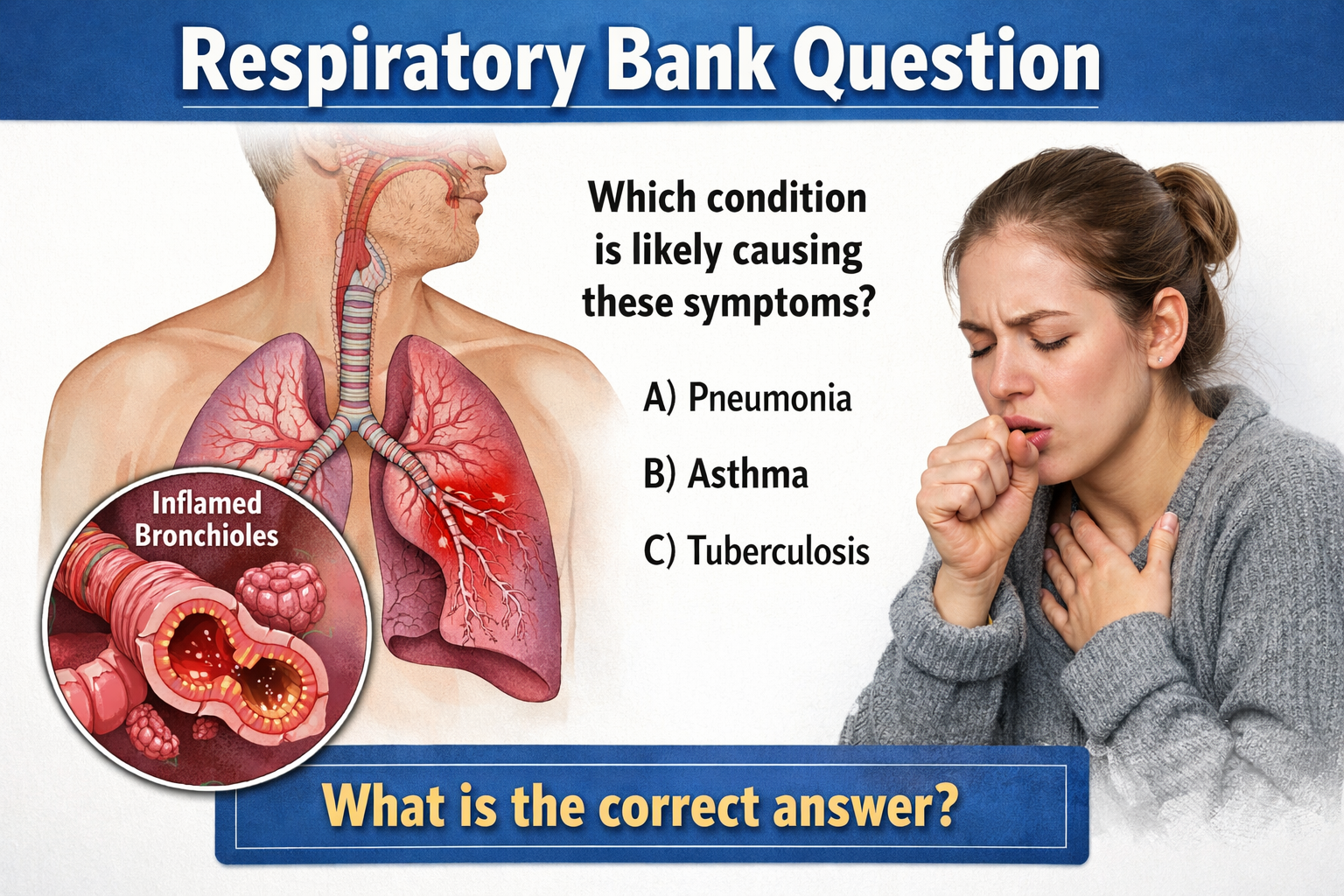
Respiratory best practices question for nursing student
$25.00$20.00
1-Which assessment finding for an older patient indicates that the nurse should take immediate
action?
a. Weak cough effort
b. Barrel-shaped chest
c. Dry mucous membranes
d. Bilateral basilar crackles
ANS: D
Crackles in the lower half of the lungs indicate that the patient may have an acute problem such
as heart failure. the nurse should immediately accomplish further assessments, such as O2
saturation, and notify the health care provider. A barrel-shaped chest, and a weak cough effort
are associated with aging and immediate action is not indicated. An older patient has a less
forceful cough and fewer and less functional cilia. Mucous membranes tend to be drier.
2. After the nurse has received change-of-shift report, which patient would the nurse assess first?
a. A patient with pneumonia who has crackles in the right lung base
b. A patient with chronic bronchitis who has a low forced vital capacity
c. A patient with possible lung cancer who has just returned after bronchoscopy
d. A patient with hemoptysis and a 16-mm induration after tuberculin skin testing
ANS: C
Because the cough and gag are decreased after bronchoscopy, this patient would be assessed
for airway patency. the other patients do not have clinical manifestations or procedures that
require immediate assessment by the nurse.
3. The nurse assesses a patient with chronic obstructive pulmonary disease (COPD) who has
been admitted after increasing dyspnea over the past 3 days. Which finding is important for
the nurse to report to the health care provider?
a. Respirations are 36 breaths/min.
b. Anterior-posterior chest ratio is 1:1.
c. Lung expansion is decreased bilaterally.
d. Hyperresonance to percussion is present.
ANS: A
The increase in respiratory rate indicates respiratory distress and a need for rapid interventions
such as administration of O2 or medications. theother findings are common chronic changes
occurring in patients with COPD.